Measles Elimination Status Lost: What the US Outbreak Means
By Eoin Villarin, 2026-11-18
PAHO says the US has lost its measles elimination status after the same strain spread for over 12 months. Here are the outbreaks, official numbers and CDC guidance.
Why did the US lose its measles elimination status?
PAHO announced on November 17, 2026, that the US lost the measles elimination status it held since 2000. Its expert commission found the same measles strain had spread inside the country without interruption for 12 months or more, with a Utah and Arizona outbreak reported as the deciding chain. The CDC counts 5,412 US cases in 2026 as of November 12.
Key takeaways
- PAHO withdrew US measles elimination status on November 17, 2026, after a commission meeting on November 10 to 13.
- The rule: the same measles strain spreading inside a country without a break for 12 months or more.
- KFF Health News reported a Utah and Arizona outbreak that began in June 2025 was the deciding chain.
- The CDC counts 5,412 cases in 2026 and 2,289 in 2025; states report 10 deaths this year, the CDC 6.
- The CDC recommends two MMR doses; if exposed, call your doctor first and ask your health department for advice.
The United States has lost its measles elimination status. On November 17, 2026, the Pan American Health Organization (PAHO) said an expert commission found that measles has spread inside the country without a break for 12 months or more, so the disease is again considered endemic in the US for the first time since elimination was declared in 2000. Mexico and Bolivia lost their status in the same decision. Below: what the status means, which outbreaks led to it, the official numbers and what health guidance says to check now.
This is a news summary, not medical advice. Health statements below come from the CDC or health departments; for personal advice, talk to your doctor or your local health department.
Measles elimination status at a glance
| Item | Details |
|---|---|
| Decision | US measles elimination status withdrawn, announced by PAHO on November 17, 2026 |
| Who decided | PAHO's Measles, Rubella and Congenital Rubella Syndrome Elimination Regional Monitoring and Re-Verification Commission (RVC) recommended it; PAHO Director Jarbas Barbosa accepted the recommendation |
| Commission meeting | November 10 to 13, 2026, in Washington, D.C. |
| Rule that was met | The same measles genotype and lineage circulating without interruption for 12 months or more |
| Other countries | Mexico and Bolivia also lost status; Canada lost its status in November 2025 |
| US cases in 2026 | 5,412 confirmed as of November 12 (CDC) |
| US cases in 2025 | 2,289 confirmed (CDC) |
| US deaths in 2026 | 6 on the CDC's preliminary count; 10 reported by state health departments |
| Status held since | 2000 |
What does measles elimination status mean?
Elimination does not mean zero cases. A country keeps the status as long as no single chain of measles spread lasts 12 months or longer. Travel-related cases and outbreaks stopped within a year do not cost a country its status, which is why the US kept it through the large outbreaks of 2015 and 2019.
PAHO's criterion is specific: endemic transmission is considered re-established when the same measles virus genotype and lineage circulates uninterrupted for 12 months or more inside a country. According to NBC News, the commission reviewed genetic data from locally acquired cases, vaccination coverage, the quality of surveillance and the resources available for outbreak response.
Experts quoted by CBS News said the label itself does not suddenly raise the risk for someone already vaccinated. It confirms that measles is now spreading locally, not only arriving from abroad.
Who decided, and when?
The decision came from PAHO, the regional office of the World Health Organization for the Americas. Its re-verification commission met from November 10 to 13, 2026, and reviewed evidence that included epidemiological and laboratory data submitted by the CDC, Al Jazeera reported. NBC News named its chair as Jon Andrus of George Washington University.
KFF Health News first reported the outcome on November 14, citing researchers familiar with the decision. PAHO made it official at a media briefing on Tuesday, November 17, where Barbosa said the commission had found endemic transmission re-established in Bolivia, Mexico and the United States and that he accepted its recommendation. In PAHO's release he called it "a serious warning for our Region, but it is not an irreversible setback."
Which measles outbreak caused the loss?
According to KFF Health News, as reported by The Salt Lake Tribune, the deciding outbreak was Utah's, which passed the one-year mark in June 2026. It is part of a two-state outbreak that crosses the Utah and Arizona border.
- Early 2025, Texas: A large outbreak began in West Texas. The Salt Lake Tribune reported it spread to Mexico and at least three other states, sickening more than 4,500 people across the two countries and killing at least 16.
- June 2025, Utah and Arizona: An outbreak began along the Utah and Arizona border. St George News reported Utah's 2025 to 2026 total at 725 cases, citing state health department figures.
- 2025 to 2026, South Carolina: A large outbreak that ABC News listed among last year's sustained US outbreaks.
- 2026, Pennsylvania and other states: CBS News reported Pennsylvania has the largest outbreak this year, with more than 1,500 cases and 7 deaths. ABC News listed large ongoing outbreaks in Pennsylvania, Wisconsin, Minnesota and Indiana, and said New York State declared a state of emergency.
Genetics links several of these outbreaks. Healthbeat reported that the Broad Institute, working with the CDC, sequenced about 1,000 measles genomes from cases between January 20, 2025, and January 20, 2026, and that the outbreaks in Texas, Utah and South Carolina were fueled by the same virus type, labeled D8-9171. Because this type also circulates in Canada and Mexico, Healthbeat noted, genetics alone could not show whether it spread between states or arrived more than once.
How many measles cases and deaths are there?
These are the official US numbers from the CDC's measles data page, updated November 13, 2026, with counts as of November 12:
| Measure | 2025 | 2026 (to Nov 12) |
|---|---|---|
| Confirmed cases | 2,289 | 5,412 |
| Reporting jurisdictions | 45 | 47 |
| Outbreaks | 48 | 43 new |
| Share of cases linked to outbreaks | 90% | 96% |
| Deaths | 3 (CBS News, citing CDC) | 6 (CDC, preliminary); 10 per state health departments |
Contagion Live's breakdown of CDC data adds that 591 people were hospitalized in 2026, 1,385 cases came from outbreaks that started in 2025, and 96% of cases were unvaccinated or of unknown status.
The death count differs by source. The CDC lists 6 preliminary deaths for 2026. State health departments have reported 10: CNBC listed seven in Pennsylvania, two in Wisconsin and one in New York. Contagion Live reported the CDC is working with state epidemiologists on a standard definition for measles deaths. CNBC reported that all deaths with a known vaccination status were in unvaccinated people.
NBC News said the 2026 total is the highest since 1991. Across the Americas, PAHO counted 58,213 confirmed cases and 82 deaths in 2026 as of November 13, compared with 12,806 cases in the same period of 2025.
What changes now for the US, Canada and Mexico?
For the United States
PAHO's Daniel Salas said the US must submit a corrective action plan describing its outbreak response, Contagion Live reported, and must then go at least 12 months without endemic transmission to begin regaining the status. Experts quoted by NBC News said this could take years.
The CDC said it is committed to regaining elimination status and has invested $100 million in state and local health departments. CDC Director Erica Schwartz said the designation is not what protects Americans, and that vaccination does. HHS said it will keep working to close vaccination gaps, and that Secretary Robert F. Kennedy Jr. and Schwartz continue to recommend the MMR vaccine.
For Canada and Mexico
Canada lost its elimination status in November 2025 after sustained transmission. PAHO says Canada has since interrupted that chain of transmission and is working to regain its status. Mexico lost its status in this week's decision, along with Bolivia. PAHO notes the Americas had regained regional elimination status in 2024 after Venezuela and Brazil interrupted endemic transmission, a standing the region lost when Canada's status was withdrawn.
For travel
No new travel restrictions tied to the decision were reported in the coverage reviewed here. The CDC's advice stays the same: be protected before international travel or travel to an outbreak area. Dr. Celine Gounder, a CBS News medical contributor, said the US could now export measles to other countries, and advised emergency rooms and pediatricians to consider measles in anyone with fever and rash, whether or not they traveled.
What are the symptoms of measles?
According to the CDC, symptoms usually follow this pattern:
- 7 to 14 days after exposure: high fever (it can go above 104 degrees F), cough, runny nose, and red, watery eyes.
- 2 to 3 days after symptoms start: tiny white spots (Koplik spots) may appear inside the mouth.
- 3 to 5 days after symptoms start: a rash of flat red spots begins at the hairline on the face and spreads down to the neck, trunk, arms, legs and feet. The fever may spike when the rash appears.
The CDC says about 1 in 5 unvaccinated people who get measles are hospitalized, up to 1 in 20 children get pneumonia, and about 1 to 3 in 1,000 infected children die. Children under 5, adults over 20, pregnant people and people with weakened immune systems are at higher risk of complications.
How does measles spread?
The CDC says measles spreads easily from person to person. Key points from its guidance:
- The virus spreads when an infected person coughs or sneezes, and it can stay in the air of a room for up to two hours after that person leaves.
- Up to 90% of close contacts who are not immune will likely become infected.
- People are contagious from 4 days before the rash appears to 4 days after, so they can spread it before they know they are sick.
Who should check their MMR vaccination?
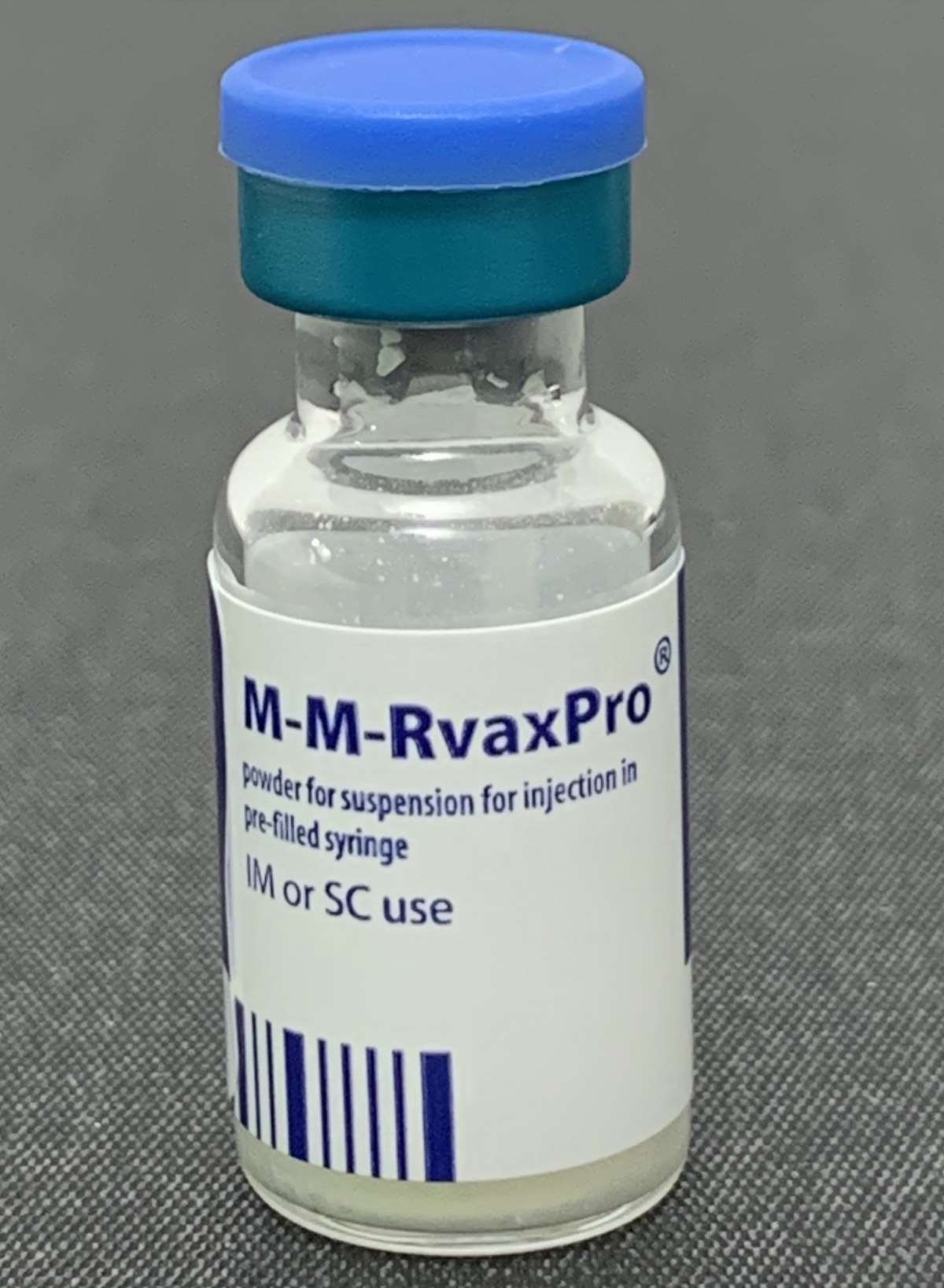
The CDC calls the MMR vaccine the best protection against measles. It estimates one dose is about 93% effective against measles and two doses about 97% effective. Here is the CDC schedule:
| Group | CDC recommendation |
|---|---|
| Children | Dose 1 at 12 to 15 months, dose 2 at 4 to 6 years |
| Infants 6 to 11 months traveling internationally | One early dose before travel, then the routine two doses after the first birthday |
| Adults without evidence of immunity | At least one documented dose |
| College students, healthcare workers, international travelers | Two doses, at least 28 days apart |
| Born before 1957 | Generally presumed protected (healthcare workers may need doses without lab evidence) |
NBC News reported that some health departments in outbreak areas now recommend an early dose for infants as young as 6 months. Follow your own state or local health department on this.
Step by step: check your status
- Find your records. Check a vaccination card, school records, your doctor's office or your state immunization registry. CDC guidance does not count a verbal report without written proof.
- Check the dose count. Compare your records with the table above for your age and situation.
- If you cannot find records, the CDC says to get vaccinated, especially before international travel. It notes an extra dose is not harmful.
- Ask about exceptions. The CDC says people who are or may be pregnant or have weakened immune systems, among others, should not get MMR or should wait. Ask your doctor.
- Plan travel early. The CDC recommends completing doses at least 2 weeks before departure, and watching your health for 3 weeks after you return.
What should you do if you are exposed to measles?
The CDC's main instruction is to call your doctor immediately if you think you or your child have been exposed. State health departments add practical steps:
- Call before you go. New Jersey and Georgia health officials say to phone the doctor's office or emergency room before arriving, so staff can keep you away from other patients.
- Ask about post-exposure protection. According to the CDC, an MMR dose within 72 hours of exposure may give some protection or a milder illness, and high-risk people may receive immune globulin within 6 days.
- Expect quarantine if you are not immune. Georgia's health department says people without immunity should stay home and away from others for 21 days after their last exposure. People with two documented MMR doses generally do not need to quarantine.
- Watch for symptoms for 21 days. Fever, cough, runny nose, red eyes and then a rash. If they appear, call ahead again before seeking care.
- Follow your local health department. Rules differ by state.
A note for clinics, schools and community websites
During outbreaks, people search for exposure sites fast, usually on a phone. If you run a site for a clinic, school or community group, link to your health department's official exposure page instead of copying details that go stale, and keep contact numbers current.
Sources
- PAHO: measles elimination statement, November 17, 2026
- CDC: Measles cases and outbreaks
- CDC: Measles symptoms and complications
- CDC: How measles spreads
- CDC: Measles vaccination
- CDC: Vaccine considerations
- CDC: Plan for travel
- Georgia DPH: Measles exposure
- New Jersey DOH: Measles exposure guidance
- NBC News
- CBS News
- CNBC
- ABC News
- Contagion Live
- Al Jazeera
- The Salt Lake Tribune (KFF Health News)
- St George News
- Healthbeat: measles genome sequencing
FAQ
Has the US lost its measles elimination status?
Yes. PAHO announced on November 17, 2026, that the US lost the status it held since 2000, after finding the same strain spread inside the country for 12 months or more. Mexico and Bolivia lost theirs too.
Does losing elimination status mean measles is more dangerous for me?
The label does not change the virus, and experts quoted by CBS News said it does not sharply raise risk for vaccinated people. Unvaccinated people and infants face the most risk. Ask your doctor about your own situation.
How many measles cases are there in the US in 2026?
The CDC reported 5,412 confirmed cases as of November 12, 2026, more than double the 2,289 in 2025. The CDC lists 6 preliminary deaths; states have reported 10.
Which outbreak caused the US to lose measles elimination status?
KFF Health News reported the deciding outbreak was Utah's, part of a Utah and Arizona outbreak that passed one year of continuous spread in June 2026.
How can the US get its measles elimination status back?
PAHO's Daniel Salas said the US must submit a corrective action plan and then go at least 12 months without endemic transmission. PAHO calls for at least 95% two-dose MMR coverage in every community.
Do adults need a measles booster?
The CDC says most adults need at least one documented MMR dose, and college students, healthcare workers and international travelers need two. People born before 1957 are generally presumed protected. Your doctor can advise you.