Disappearing Planet TOI-2535 b: Why It Vanished and When It Returns
By Eoin Villarin, 2026-11-11
Astronomers watched hot Jupiter TOI-2535 b stop transiting its star in 2026. What happened, how a hidden neighbor tilted its orbit, and when it comes back.
Why did the planet TOI-2535 b disappear?
TOI-2535 b did not actually disappear. The hot Jupiter, about 1,000 light-years away, stopped passing in front of its star in 2026 because gravity from a hidden neighboring planet makes its orbit wobble like a top, tilting it out of line with Earth. Astronomers expect it to transit again in roughly 30 to 50 years.
Key takeaways
- TOI-2535 b is a hot Jupiter about 1,000 light-years away that orbits its star every 8.25 days.
- NASA TESS watched it transit from April 2019 to March 2026, then the transits stopped in 2026.
- Before vanishing, its transits ran up to six hours early or late and grew shorter and shallower.
- A hidden neighboring planet is tilting its orbit, so it no longer crosses the star from our view.
- The team, led by UCLA, expects it to transit again in roughly 30 to 50 years.
"Planet" is trending on Google today because astronomers have reported something nobody had seen before: a planet that disappeared from view. The planet, TOI-2535 b, is a hot Jupiter about 1,000 light-years from Earth. For seven years it passed in front of its star like clockwork, then its transits grew shorter and fainter and, in 2026, stopped completely. The planet did not explode or fall into its star. A hidden neighbor is tilting its orbit so it no longer crosses our line of sight. Here is what happened, how the astronomers worked it out, and when we might see it again.
What is the disappearing planet?
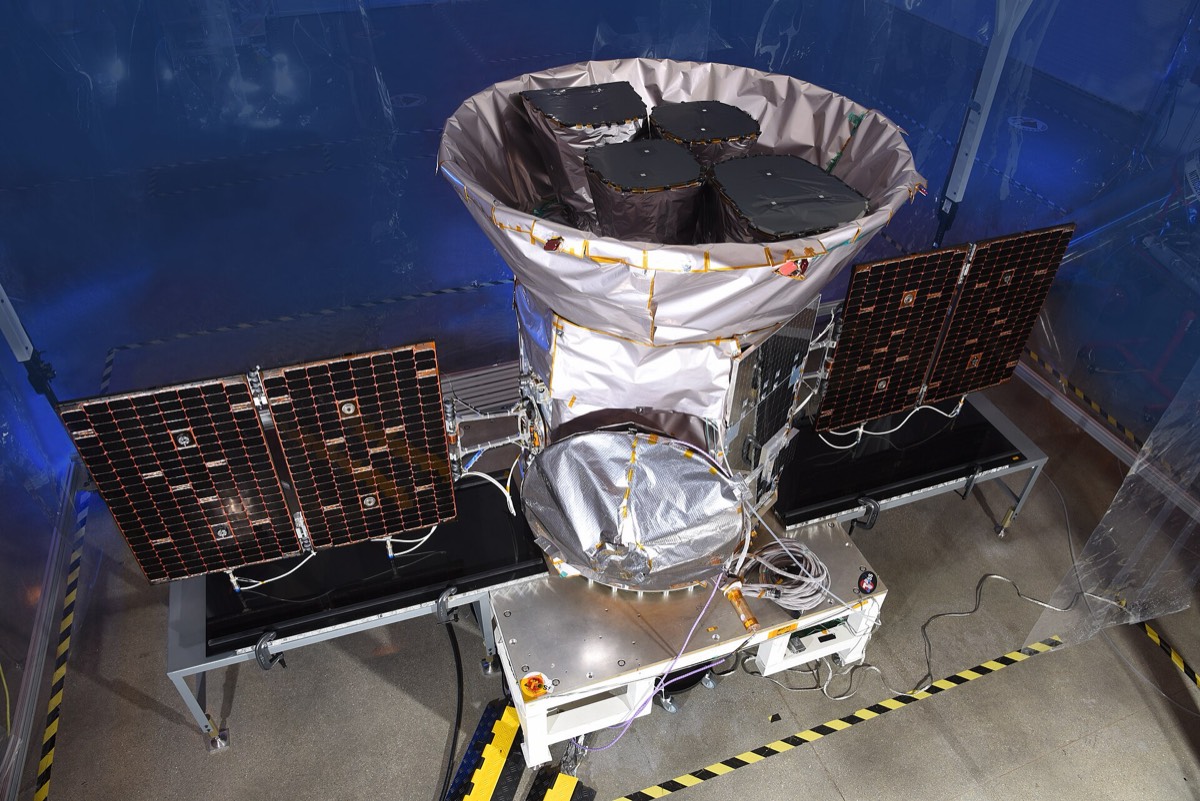
TOI-2535 b is a gas giant about the size of Jupiter that orbits its star every 8.25 days, roughly ten times faster than Mercury orbits the Sun. Planets like this are called hot Jupiters because they sit so close to their stars that they are scorching hot. It was found by NASA's Transiting Exoplanet Survey Satellite (TESS), which spots planets by watching for the small dip in a star's light when a planet passes in front of it. That passage is called a transit.
| Fact | TOI-2535 b |
|---|---|
| Type | Hot Jupiter (Jupiter-sized gas giant) |
| Distance from Earth | About 1,000 light-years |
| Orbital period | 8.25 days |
| Found by | NASA TESS |
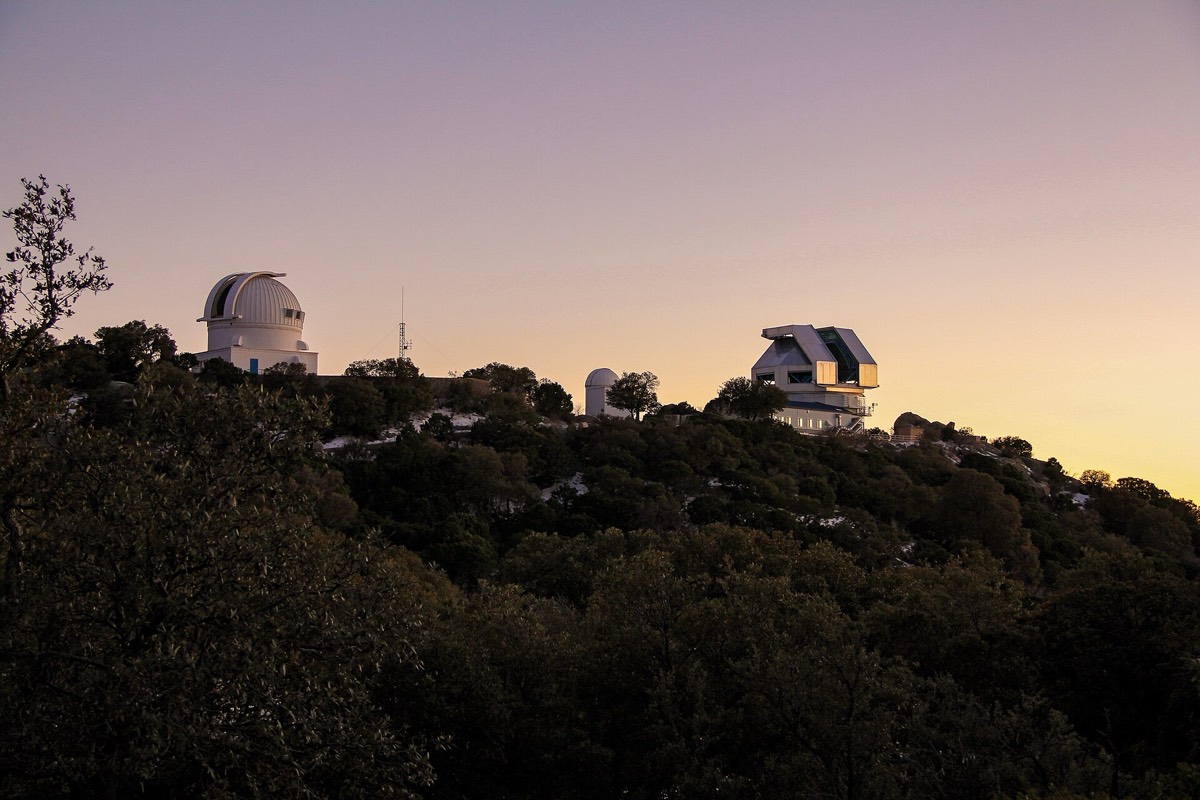
| Followed up with | WIYN 3.5-meter telescope, Kitt Peak National Observatory, Arizona |
| Observed | April 2019 to March 2026 |
| Transits stopped | 2026 |
| Expected to transit again | In roughly 30 to 50 years |

Why did the planet vanish?
It is still there. What vanished is the transit. Astronomers can only see a planet's transit if its orbit is lined up edge-on from our point of view. According to the research team, a second, unseen planet in the same system pulls on TOI-2535 b and makes its orbit wobble like a spinning top. Over time that wobble tilted the orbit out of line with Earth.
You could see it happening in the data before the transits stopped:
- The timing went off schedule. A planet on its own transits at the same interval every time. TOI-2535 b arrived early or late by up to six hours, a classic sign that another body is tugging on it.
- The transits got shorter. As the orbit tilted, the planet's path moved away from the middle of the star toward its edge, so each crossing took less time.
- The transits got shallower. Near the edge, the planet blocked less of the star's light, so the dip in brightness got smaller.
- Then nothing. In 2026 the planet's path missed the star's disk completely and the transits did not appear at all.
Lead author Samuel Yee, a 51 Pegasi b Postdoctoral Fellow at UCLA, said it is "the most extreme example we've seen because the two planets are interacting so strongly." Co-lead Erik Petigura compared it to eclipses: the Moon passes between Earth and the Sun every month, but because its orbit is tilted, eclipses are much rarer.
How did astronomers find out?
TESS photographed the star in several observing runs from April 2019 to March 2026. The team, led by Yee and Petigura at UCLA, tracked every transit they could find over those seven years and used the WIYN 3.5-meter telescope at Kitt Peak National Observatory in Arizona for more precise follow-up measurements. Their study, "A TESS Disappearing Act: The Vanishing Transits of TOI-2535 b," is published in The Astrophysical Journal Letters (DOI 10.3847/2041-8213/aeb4a4). The university announced it on November 9, 2026, and news outlets picked it up the next day.

Will TOI-2535 b come back?
Yes, if the models are right. The wobble is a cycle, so the orbit should tilt back into line with Earth. The team expects TOI-2535 b to transit its star again in roughly 30 to 50 years. The hidden neighbor could show up much sooner, and finding it would let astronomers check whether its gravity explains both the timing changes and the disappearance.
Why it matters for how planets form
Hot Jupiters probably did not form where they are now. Standard models suggest giant planets need a lot of ice to form, and ice only survives far from a star, so these planets must have moved inward. There are two main ideas: a violent path, where the planet is thrown onto a stretched, elliptical orbit that later shrinks, or a gentle path, where it slowly spirals inward through the disk of gas and dust around a young star. A violent path would likely have thrown out any close neighbor. Because TOI-2535 b still has one, the authors suggest it took the gentle route.
What is the "planet" trend about?
Searches for "planet" jumped after outlets such as KTLA and The Independent ran headlines about a planet 1,000 light-years away that "mysteriously vanishes." The headlines make it sound like the planet blew up. The real story is quieter but just as interesting: the planet is fine, its orbit is slowly tilting, and astronomers caught the change in real time for the first time.
What a vanishing planet teaches about a website vanishing from Google
TOI-2535 b did not disappear overnight. There were warning signs for years: transits arriving late, getting shorter, getting shallower. Websites fade from search the same way. Rankings rarely drop to zero in one day. They slip a few positions, clicks shrink, pages drop out of the index one by one, and by the time someone notices, the traffic is gone. Here is how to catch it early:
- Track the small signals. Watch impressions, clicks and average position in Google Search Console every week, not just total traffic. A slow decline is your "shallower transit."
- Find the hidden neighbor. The astronomers inferred a planet they cannot see from its pull on one they can. A sudden drop often has an invisible cause too: a plugin update that added noindex, a broken redirect, a slow server or a Google update. A free website audit finds those causes.
- Keep the orbit aligned. Fix crawl errors, keep pages fast and update content that has gone stale. My SEO services cover the full checklist.
- Keep watching. Seven years of data is what made this discovery possible. Ongoing website maintenance with monthly reports means you see the trend before it becomes a disappearance.
For the latest search changes, read my guide to Google Search changes in November 2026.
Frequently asked questions
Did a planet really disappear?
No. TOI-2535 b is still orbiting its star. Its transits stopped because its orbit tilted, so it no longer passes in front of the star as seen from Earth.
Where is the disappearing planet?
TOI-2535 b is about 1,000 light-years from Earth. It orbits its star every 8.25 days.
What made TOI-2535 b disappear?
The research team says gravity from a hidden neighboring planet makes TOI-2535 b's orbit wobble like a top, tilting it out of alignment with our line of sight.
When will TOI-2535 b reappear?
The team expects it to transit its star again in roughly 30 to 50 years. Its unseen neighbor may be detected sooner.
Who discovered the disappearing planet?
An international team led by Samuel Yee and Erik Petigura at UCLA, using data from NASA's TESS and the WIYN 3.5-meter telescope at Kitt Peak National Observatory.
Is the disappearing planet dangerous to Earth?
No. It is about 1,000 light-years away and has no effect on Earth or our solar system.
Sources
- UCLA Newsroom: First known 'disappearing planet' has a neighbor that makes it wobble like a top
- The Astrophysical Journal Letters: A TESS Disappearing Act: The Vanishing Transits of TOI-2535 b
- Phys.org: First known 'disappearing planet' has a neighbor that makes it wobble like a top
- EurekAlert: First known 'disappearing planet' has a neighbor that makes it wobble like a top
- KTLA: Planet 1,000 light-years away mysteriously vanishes before astronomers' eyes
- NASA: TESS mission