Nvidia RTX Spark Laptops: Specs, US Prices and What They Mean for Business
By Eoin Villarin, 2026-10-29
Nvidia RTX Spark laptops are on sale from $2,599 with up to 128GB of memory and Arm-based Windows. Here are the specs, prices and what local AI means for your business.
What are Nvidia RTX Spark laptops and how much do they cost?
Nvidia RTX Spark laptops are Windows on Arm PCs built on Nvidia's N1X superchip, which combines a Blackwell RTX GPU with up to 6,144 cores, a 20-core Grace CPU and up to 128GB of unified memory. They began shipping on October 16, 2026, from ASUS, Dell, HP, Lenovo, Microsoft and MSI, starting at $2,599 in the US.
Key takeaways
- Nvidia unveiled the RTX Spark superchip at GTC Taipei on May 31, 2026, and RTX Spark PCs began shipping on October 16, 2026.
- The top RTX Spark configuration pairs a 20-core Nvidia Grace CPU with a 6,144-core Blackwell RTX GPU, up to 128GB of unified memory and up to 1 petaflop of AI performance.
- Microsoft's Surface Laptop Ultra costs $2,599 to $5,899 in the US, and the Surface RTX Spark Dev Box costs $5,999 with US shipping in November 2026.
- RTX Spark laptops run the Arm version of Windows 11, and Nvidia says x86 app compatibility under Microsoft's Prism emulator depends on each app.
- Microsoft Execution Containers, which control what AI agents can access on a PC, became generally available on Windows 11 in October 2026.
Nvidia RTX Spark laptops went on sale in the United States in October 2026, putting Nvidia's first Windows PC superchip into thin laptops from Microsoft, ASUS, Dell, HP, Lenovo and MSI. The chip pairs an Nvidia Blackwell RTX GPU with a 20-core Arm-based Grace CPU and up to 128GB of shared memory, and Nvidia says it delivers up to 1 petaflop of AI performance. At the same time, Microsoft rebuilt parts of Windows 11 around AI agents that run on the device instead of only in the cloud.
This article is for US business owners, creative teams and IT decision makers who are wondering whether these machines are worth $2,599 or more, and what the shift to local AI and Arm-based Windows means for their software and website. You get the specs, the launch prices, the Windows changes and a practical checklist.
Specs and dates come from Nvidia's launch announcement, the official RTX Spark specifications page and Microsoft's Windows Experience Blog. Performance figures are company claims.
Nvidia RTX Spark at a Glance
| Configuration | CPU | GPU | AI performance | Memory | Power |
|---|---|---|---|---|---|
| Laptop N1X (top) | 20-core Nvidia Grace | 6,144-core Blackwell RTX | 1 petaflop | Up to 128GB LPDDR5X | 45 to 80W |
| Laptop N1X | 18-core Nvidia Grace | 5,120-core Blackwell RTX | 827 teraflops | Up to 32GB LPDDR5X | 45 to 80W |
| Desktop N1X | 20-core Nvidia Grace | 6,144-core Blackwell RTX | 1 petaflop | Up to 128GB LPDDR5X | 140W |
All three run Windows 11 and use unified memory on a 256-bit interface, according to Nvidia's specifications page. Microsoft notes that the 1 petaflop figure is theoretical FP4 performance with sparsity.
What Is Nvidia RTX Spark?
Nvidia unveiled RTX Spark at GTC Taipei on May 31, 2026. It is a single package that joins a Blackwell RTX GPU and an Nvidia Grace CPU over Nvidia's NVLink-C2C chip-to-chip link. Nvidia says MediaTek, the Arm chip designer, collaborated on the custom CPU. The chip is also known by its product name, N1X.
The important design choice is shared memory. The CPU and GPU draw from one pool of up to 128GB, so large AI models and big creative projects do not need to fit in a separate, smaller graphics memory. Nvidia claims the top configuration can run AI models with 120 billion parameters and up to 1 million tokens of context, render 3D scenes of 90GB or more, and edit 12K video. At launch Nvidia CEO Jensen Huang summed up the pitch in five words: "The PC is being reinvented."
Why it matters that RTX Spark uses Arm
The Grace CPU uses Arm cores, not the x86 design used by Intel and AMD chips. That makes these Windows on Arm PCs. Nvidia's own RTX Spark porting guide says many existing x86 and x64 apps run through Microsoft's Prism emulator, but warns that compatibility depends on each app and its dependencies. Native Arm64 apps run best, which is why Nvidia publishes a guide for developers moving their software over.
How Much Do RTX Spark Laptops Cost?
Nvidia's October 28 update says RTX Spark laptops are available now from ASUS, Dell, HP, Lenovo, Microsoft and MSI, starting at $2,599, with 128GB configurations on shelves. Acer and Gigabyte models are due later. Microsoft says shipping began on October 16.
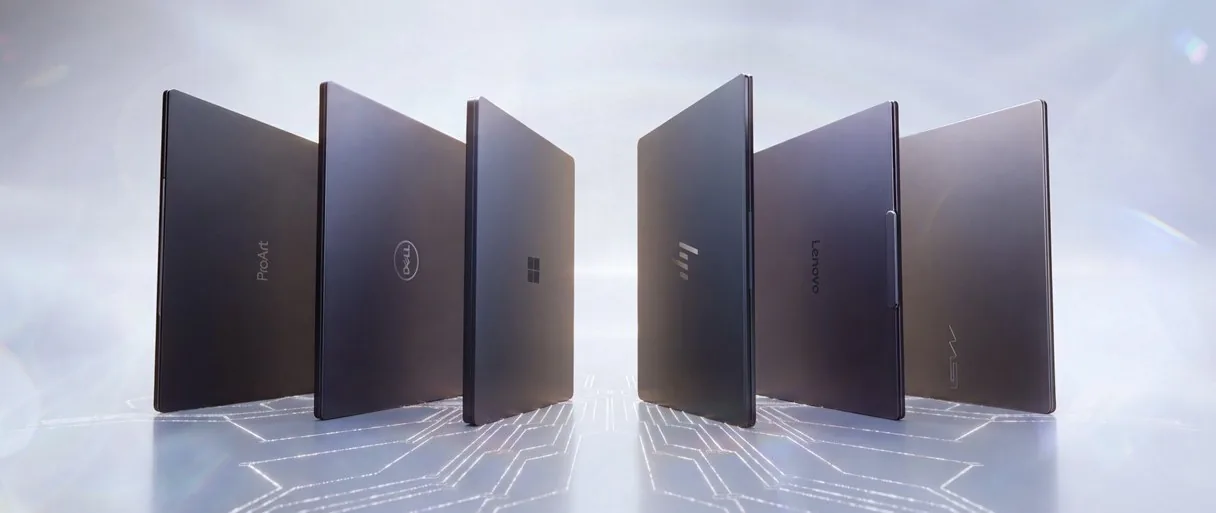
US prices vary widely by memory and storage. These are the launch ranges reported in PCWorld's launch roundup and Microsoft's own store:
| Model | Screen | US price at launch |
|---|---|---|
| Microsoft Surface Laptop Ultra | 15-inch touchscreen | $2,599 to $5,899 |
| ASUS ProArt P14 | 14-inch OLED | About $2,600 to $6,500 |
| ASUS ProArt P16 | 16-inch OLED | About $2,800 to $7,000 |
| Lenovo Yoga 9n | 16-inch OLED | About $3,000 to $4,500 |
| HP OmniBook Ultra 16 | 16-inch OLED | From about $3,200 |
| Dell XPS 16 Creator Edition | 16-inch OLED | From about $3,800 |
Surface Laptop Ultra and the Surface RTX Spark Dev Box
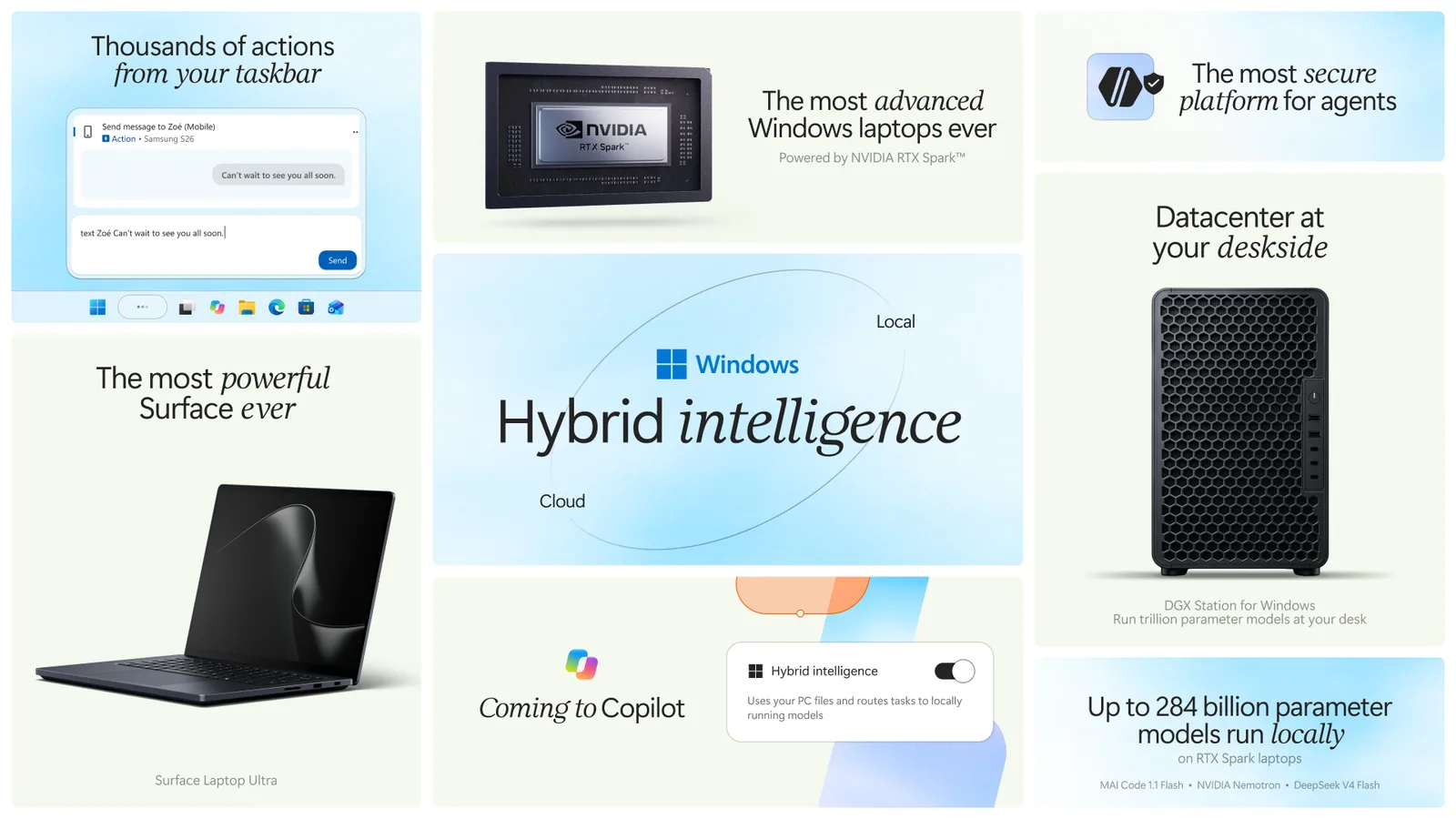
Microsoft's Surface announcement lists the Surface Laptop Ultra from $2,599 with up to 128GB of unified memory, a 15-inch touchscreen and a chassis under 18mm thick. A Surface Laptop Ultra for Business version is also on sale. Microsoft is offering up to $1,000 cash back in the US and Canada for trading in an eligible MacBook Pro through November 23, 2026.
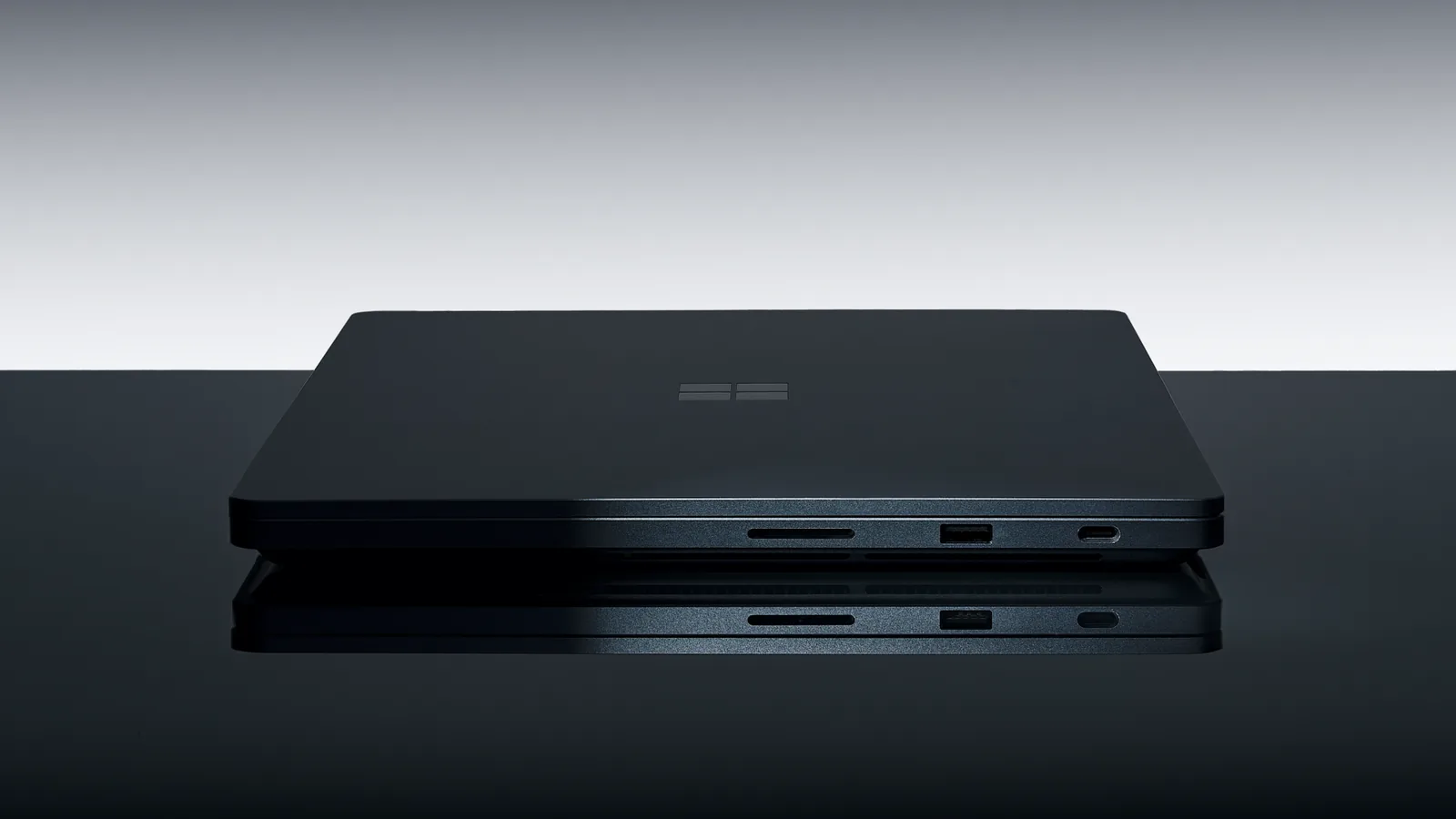
For developers, Microsoft also opened pre-orders for the Surface RTX Spark Dev Box at $5,999, sold only in the US on Microsoft.com and shipping in November 2026. It comes with Visual Studio Code, Git, GitHub CLI, GitHub Copilot, WSL, Python and Node installed.
What Changed in Windows for AI Agents?
On October 7, Microsoft described a plan it calls hybrid intelligence: AI agents run locally when that makes sense and use the cloud when they need more power. Several pieces shipped or were scheduled with RTX Spark.
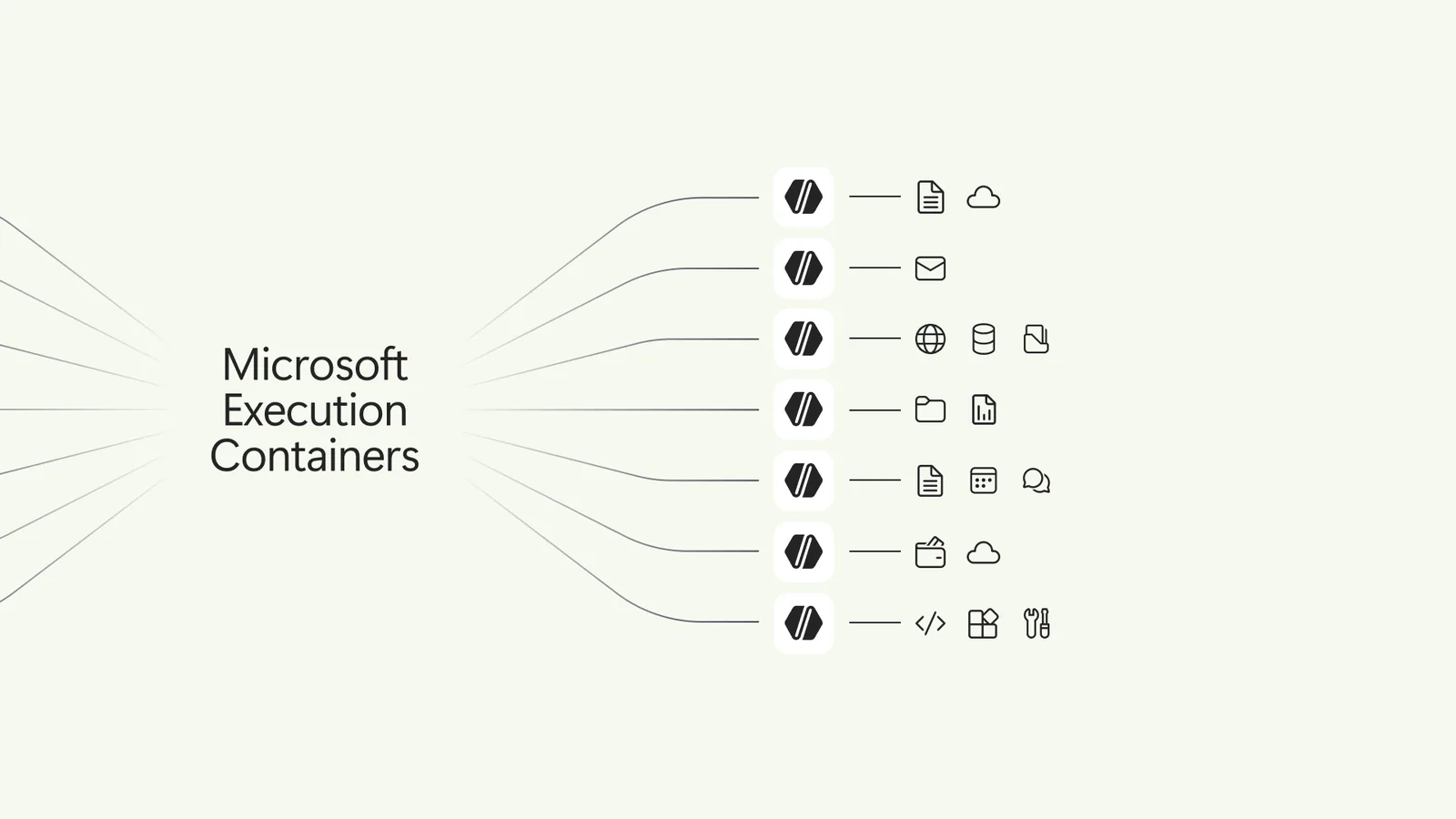
- Microsoft Execution Containers (MXC) are generally available on Windows 11. They let an organization define which files and networks an AI agent can reach, enforced while the agent runs. Microsoft lists Codex, GitHub Copilot, OpenClaw, Replit, LM Studio, Nvidia OpenShell and Unsloth as already supporting MXC, with Claude Code, Perplexity and others coming.
- Local models: Microsoft is bringing its MAI Code 1.1 Flash coding model to devices with a 256K token context window, and Windows ML now supports llama.cpp so developers can run more open-source models.
- Copilot on Copilot+ PCs: with permission, Copilot will gain local file context, local actions such as organizing files and running diagnostics, and a mix of on-device and cloud models. Microsoft says these roll out over the coming months and vary by device and market.
- Search actions: thousands of settings and tasks can run from the taskbar search box, now rolling out to Windows Insiders in an experimental channel.
Nvidia adds its own layer. Its OpenShell runtime lets users set agent permissions and route queries to local models based on privacy rules, and Nvidia says it can mask personal information before a prompt goes to a cloud model. Adobe has beta releases of Photoshop and Premiere with native RTX Spark support, according to Nvidia.
Who Should Buy an RTX Spark Laptop?
For most office work, no. Email, spreadsheets, web apps and video calls do not need a petaflop of AI compute, and a current mid-range laptop is the better value. RTX Spark makes sense in three cases:
- Creative teams that edit video, design in 3D or retouch large photo sets, where shared memory and the RTX GPU save real hours.
- Developers and data teams who want to run large open AI models locally for coding, testing or prototyping without paying per token.
- Businesses with sensitive data, such as legal, medical or financial firms, that want AI help with documents without sending them to a cloud provider.
What RTX Spark and Local AI Mean for Your Business
Even if you never buy one, this launch changes the software your customers and staff will use. Here is my checklist for US small businesses and startups.
- Audit your apps before buying Arm laptops. List the software your team cannot work without: accounting, point of sale, VPN, printer drivers, browser plug-ins and industry tools. Ask each vendor about Windows on Arm support, or test them under Prism emulation before a fleet purchase.
- Ship native Arm64 builds of your own desktop apps. If you sell or use an internal desktop app built with Electron, .NET or C++, an Arm64 build avoids emulation and runs faster with better battery life. I covered the same multi-platform build problem in building a cross-platform app from one codebase.
- Prepare your website for local AI agents. Agents like OpenClaw and Hermes Agent now run on the customer's own PC and browse sites for them. Clear structured data and machine-readable pages help them understand your products and services. My guide to making your website agent-ready explains how.
- Set agent rules before agents touch company data. Use Microsoft Execution Containers and device management to decide which folders, inboxes and systems an agent may reach. Do this before staff install agents on their own.
- Compare local and cloud AI costs. A $2,599 to $5,999 machine can replace a steady monthly API bill for heavy, repetitive AI work, but cloud models still win for occasional use. Do the math on your real workload.
- Keep your developer tools ready for both worlds. GitHub announced at Universe 2026 that Copilot Fusion can now route between local and cloud models in preview. I summarized that in my GitHub Universe 2026 roundup.
Frequently asked questions
When did Nvidia RTX Spark laptops go on sale?
Microsoft says RTX Spark PCs began shipping on October 16, 2026, after pre-orders opened on October 7. Nvidia confirmed on October 28 that laptops from ASUS, Dell, HP, Lenovo, Microsoft and MSI are available now in the US. Acer and Gigabyte models are expected later, and availability varies by manufacturer and region.
How much does the cheapest RTX Spark laptop cost?
Nvidia's October 28 update lists RTX Spark laptops starting at $2,599. Microsoft's Surface Laptop Ultra starts at $2,599 with the 18-core CPU, 5,120-core GPU and 24GB of memory, and reaches $5,899 with 128GB. Some ASUS ProArt P16 configurations are reported to cost about $7,000.
Are RTX Spark laptops Windows on Arm PCs?
Yes. The Nvidia Grace CPU in RTX Spark uses Arm cores, so the laptops run the Arm version of Windows 11. Many x86 and x64 apps run through Microsoft's Prism emulator, but Nvidia's porting guide says compatibility depends on each app and its dependencies. Check critical business software before buying.
Can RTX Spark run large AI models offline?
Nvidia and Microsoft say the 128GB configurations can run AI models above 120 billion parameters locally, and Nvidia claims up to 1 million tokens of context. Real speed depends on the model, memory configuration and settings. Running models locally keeps data on the device, which helps businesses that handle sensitive documents.
Do I need an RTX Spark laptop to use Copilot?
No. Copilot works on standard Windows 11 PCs. Microsoft's new local context, local actions and local model features are aimed at Copilot+ PCs and will roll out over the coming months, varying by device and market. RTX Spark is mainly for heavy AI, creative and development work.
Local AI Is Becoming Normal on Windows
RTX Spark is expensive and not for everyone, but it marks a real shift. Windows PCs can now run serious AI models on the desk, Arm is becoming a mainstream Windows platform, and AI agents are getting proper security controls. Businesses that check their software, prepare their websites for agents and set clear rules now will have an easier transition.
If you need a native Arm64 build of your desktop app, a private AI tool that runs on your own hardware, or a website that AI agents can understand, send me the details. I work with US teams across time zones, and you can review my past projects and case studies first. I will reply within 24 hours.