AI News October 2026: The Biggest Updates From OpenAI, Anthropic, Google, Moonshot and More
By Eoin Villarin, 2026-10-28
GPT-6.1 Terra, Claude Haiku 5.5, Gemini 4 Argon, Kimi K3.1 Pro and more: every major AI release this season, with prices, specs and what it means for your business.
The AI news October 2026 delivered is a lot to keep up with. In about eight weeks OpenAI shipped GPT-6.1 Sol and GPT-6.1 Terra, Anthropic finished its Claude 5.5 family and filed to go public, Google made Gemini 4 Argon generally available, and Moonshot AI pushed Kimi K3.1 Pro to the top of the open-weight charts. xAI, Meta, Mistral and DeepSeek all shipped something too.
Most roundups list the headlines and stop there. This one is written for people who build or run websites, online stores and small businesses. For every release you get what actually shipped, the official price and availability, and what it changes for your site, your support desk or your development budget.
Every number below comes from the company's own announcement or from independent testing by Artificial Analysis, and I link the source next to it. Where a figure is self-reported by the lab, I say so.
AI News October 2026 at a Glance
If you only have two minutes, this table covers the releases that matter most, in the order they launched.
| Company | Release | Date | Why it matters |
|---|---|---|---|
| Anthropic | Claude Opus 5.5 | Sep 22 | Top agentic coding model at a lower price than Opus 5 |
| Anthropic | Claude Sonnet 5.5 | Sep 28 | Faster mid-tier Claude at $2 / $10 per million tokens |
| OpenAI | DevDay 2026 and GPT-6.1 Sol | Sep 29 | Computer use in the Agents API, Codex in the cloud, Decisions API |
| Mistral | Mistral Large 4 (preview) | Oct 6 | Europe's trillion-parameter open-weight contender |
| Anthropic | Claude Haiku 5.5 | Oct 7 | Small, fast model at $0.10 / $0.50 per million tokens |
| Gemini 4 Argon | Oct 13 | Google's flagship reasoning model with a 1M token context | |
| xAI | Grok Voice 3.0 | Oct 14 | Number one speech-to-speech model on Artificial Analysis |
| Meta | Muse Spark Open | Oct 15 | 816B open-weight model that runs on two Mac Studios |
| DeepSeek | DeepSeek V4.1 Flash | Oct 17 | Cheaper, faster default model for the DeepSeek API |
| Anthropic | Claude Duet (preview) | Oct 21 | A proactive agent that messages you first |
| Moonshot AI | Kimi K3.1 Pro | Oct 24 | 3T-class open-weight model, weights due November 4 |
| OpenAI | GPT-6.1 Terra | Oct 26 | Mid-tier model at $1 / $5 with strong computer use |
OpenAI: GPT-6.1 Terra, DevDay 2026 and the Decisions API
OpenAI now sells four model classes, from smallest to largest: Luna, Terra, Sol and Astra. GPT-6 Astra arrived in early September as the top model, and everything OpenAI shipped since has been about bringing that capability down to cheaper tiers.
What OpenAI announced at DevDay 2026
At DevDay 2026 on September 29, OpenAI focused on agents rather than chat. According to InfoQ's DevDay recap, the main launches were:
- GPT-6.1 Sol, tuned for coding, computer use and professional work. OpenAI says it approaches GPT-6 Astra on several evaluations at one-fifth of Astra's token price.
- Computer use in the Agents API, so apps can operate software through its graphical interface, with OpenAI running the execution infrastructure.
- Codex cloud environments, letting coding tasks run remotely instead of only on your machine, plus automated code review for GitHub and GitLab and a Codex Security Cloud scanner.
- The Decisions API (limited preview), which uses the small Luna model to pick from a predefined set of answers. It is built for classification, request routing and choosing an agent's next step.
- Dots, persistent agents that keep working on ongoing tasks, and ChatGPT Space, a shared workspace for teams and agents.
GPT-6.1 Terra: the mid-tier model gets cheaper and smarter
On October 26 OpenAI released GPT-6.1 Terra in ChatGPT Work, Codex and the API. It is priced at $1 per million input tokens and $5 per million output tokens, down from $2 and $12 for GPT-5.6 Terra, according to Artificial Analysis.
The headline improvement is reliability. In Artificial Analysis testing its hallucination rate dropped from 88% to 38%, and its cost per task at maximum effort fell from $1.40 to $0.40. OpenAI's own internal test shows a similar trend: on error-inducing prompts at low reasoning effort, the error rate fell from 53.6% to 16.7%.
Anthropic: The Claude 5.5 Family, Claude Duet and an IPO Filing
Anthropic had the busiest two months of any lab. It released three models, a new agent app and a long list of company news, ending with a public IPO filing.
Claude Opus 5.5 and Sonnet 5.5
Claude Opus 5.5 launched on September 22 at $4 per million input tokens and $20 per million output tokens, down from $5 and $25 for Opus 5. Anthropic says it costs about 40% less on typical workloads and generates output more than 30% faster. It scored 66.4% on Terminal-Bench 4.0 for agentic coding and 81.8% on the OSWorld 2.1 computer use benchmark.
Claude Sonnet 5.5 followed on September 28 at $2 and $10 per million tokens. Anthropic says it runs faster and costs less than Sonnet 5 for most work, which makes it the practical default for many coding and writing jobs. Above both sits Claude Fable 5.1, released on September 15 alongside the restricted Claude Mythos model.
Claude Haiku 5.5: a frontier-grade small model
Claude Haiku 5.5 arrived on October 7 and is the release most small businesses should notice. For prompts up to 100k tokens it costs $0.10 per million input tokens and $0.50 per million output tokens, which Anthropic says makes it about 75% cheaper to run than Haiku 4.5.
It is also far more capable. Haiku 5.5 scored 72.4% on OSWorld 2.1, against 15.7% for Haiku 4.5, and it is the first Haiku model with an adjustable effort setting. Anthropic positions it for summaries, classification, live customer support and browser automation, which are exactly the jobs that power chat widgets and support bots on business websites.
Claude Duet, Agent Skills and the S-1 filing
- Claude Duet (October 21) is a research preview of a proactive agent app for US Pro and Max subscribers on a waitlist. It watches connected apps, sends a summary and asks for approval before sending messages, spending money or signing documents.
- Agent Skills (October 22), Anthropic's open format for packaging instructions and scripts for agents, was donated to the Agentic AI Foundation under the Linux Foundation, the same home as the Model Context Protocol.
- IPO: on October 26 Anthropic announced it had filed an S-1 registration statement with the SEC for a proposed initial public offering.
- Expansion: a new Singapore office (October 14) and a $100 million program to train 10,000 engineers in enterprise AI deployment by the end of 2027.
Google: Gemini 4 Argon Becomes Generally Available
Google's answer to Opus 5.5 and GPT-6 Astra is Gemini 4 Argon, which became generally available in the Gemini API on October 13 and is rolling out in the Gemini app for paid Google AI subscribers.
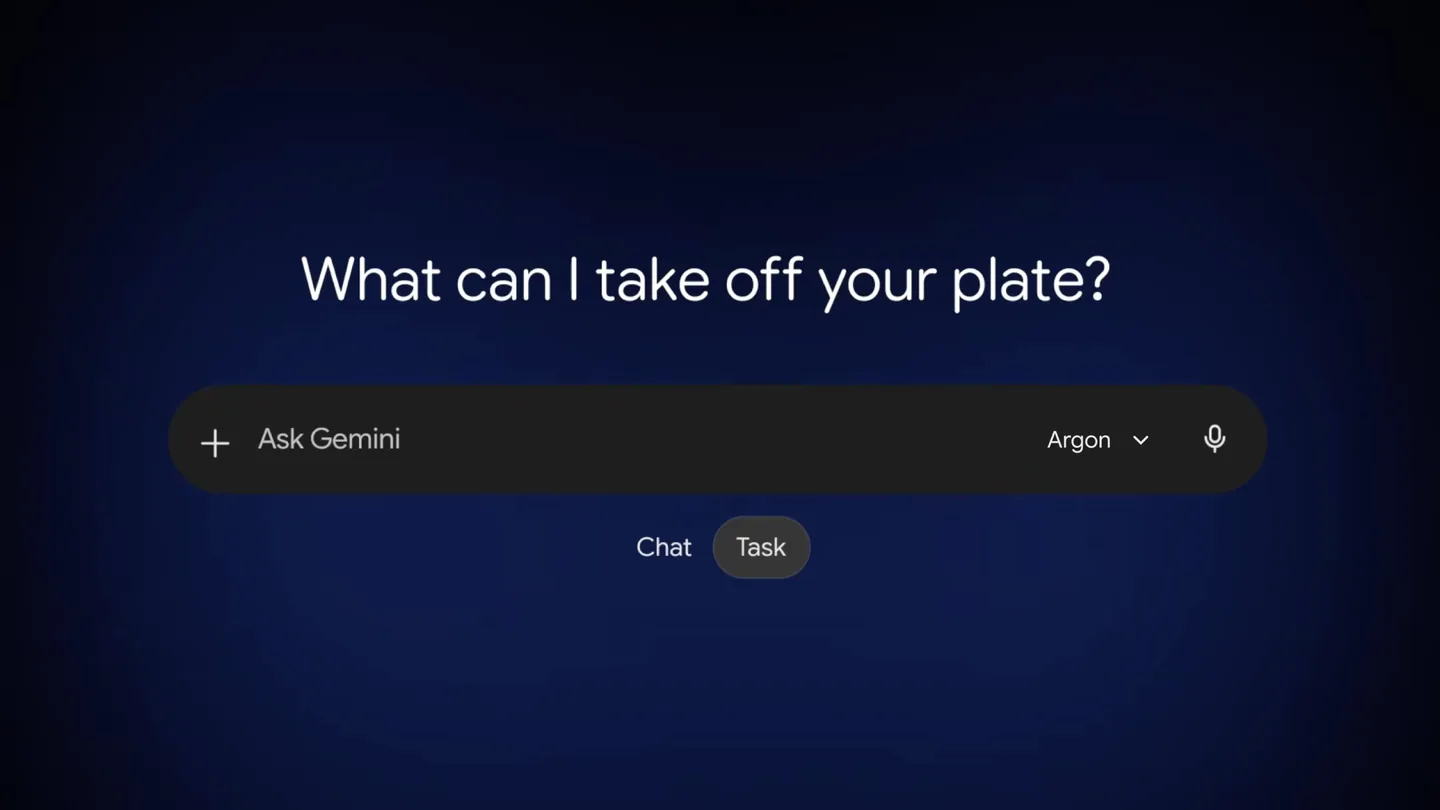
Gemini 4 Argon specs that matter
The official model page lists these details for gemini-4-argon:
- Context window: 1,048,576 tokens, shared between input and output.
- Output: 65,536 tokens by default, or up to the full context with the new long decode mode.
- Inputs: text, images, video, audio and PDF. Output is text only.
- Tools: search grounding, Google Maps grounding, code execution, function calling, structured outputs and computer use in preview.
Other Gemini API changes developers should know
The Gemini API changelog had several practical updates. Nano Banana 2.1 became the generally available image model on October 6, older Flash models were deprecated and auto-routed to Gemini 3.6 and 3.8 Flash on October 8, and on October 26 new paid-tier projects began storing Generate Content requests by default. If you send customer data to Gemini, check that storage setting on any new project.
Moonshot AI: Kimi K3.1 Pro Raises the Open-Weight Bar
Moonshot AI, the Beijing lab behind Kimi, released Kimi K3.1 Pro on October 24. The company calls it its most capable 3T-class open-weight model, with a 1 million token context window and a Highspeed variant that runs two to three times faster.
Moonshot's own results put it close to the closed frontier. It reports 65.7% on Terminal-Bench 4.0, next to 66.4% for Claude Opus 5.5 and 58.2% for GPT-6 Astra, and says its rate of hallucinated claims on a hard internal test fell from 23.4% to 8.3%. These are company-reported numbers, so treat them as a starting point.
Two details stand out in the official Kimi K3.1 blog. Full weights are due by November 4, 2026, which means businesses will be able to host it themselves. Moonshot also removed cyber-related training data before the open release, keeping its cyber capability deliberately behind the closed frontier models.
xAI, Meta, Mistral and DeepSeek: The Rest of the Field
xAI: Grok Voice 3.0
xAI's biggest October launch was voice, not text. Grok Voice 3.0 (October 14) ranks first on the Artificial Analysis Speech-to-Speech Index with a score of 86.9 and costs $0.08 per minute in the API. xAI says it already handles about 20,000 Starlink support calls a day.
Meta: Muse Spark Open
On October 15 Meta released Muse Spark Open, an 816 billion parameter model with 42 billion active parameters and a 1 million token context. Meta worked with Apple so it runs locally on two Mac Studios with M5 Ultra chips through Apple's MLX framework. The weights use Meta's own Muse Model License, which has limited commercial terms, so read it before building on it.
Mistral: Large 4, Voxtral 3 and Timestral
Mistral opened a public preview of Mistral Large 4 on October 6, a multimodal mixture-of-experts model reported at about 1.05 trillion parameters, with open weights promised for later. It followed with Voxtral 3 for voice agents on October 20 and Timestral, a 209 million parameter forecasting model that Mistral says outperforms larger models on CPU.
DeepSeek: V4.1 Flash
DeepSeek quietly upgraded its default API model. The deepseek-flash name is now served by DeepSeek-V4.1-Flash-1017 with no code changes needed, and DeepSeek added a Search and Fetch API powered by its own search engine.
What These AI Updates Mean for Your Website and Business
Strip away the benchmark wars and the AI news October 2026 brought comes down to three trends that matter for anyone running a business online.
The real story of this AI season is price. Capability that cost dollars per task a year ago now costs cents, which puts serious AI features within reach of a small business website.
- AI features are now cheap enough to add. At $0.10 per million input tokens, Claude Haiku 5.5 can summarize a long customer email for a fraction of a cent. A support chatbot, product finder or quote assistant is no longer an enterprise-only project.
- Agents can use websites on their own. OpenAI, Anthropic and Google all shipped computer use this season. AI agents will browse, compare and buy on behalf of customers, so your site needs clean structure they can read. My guide to making your website agent-ready covers structured data, llms.txt and MCP, and online stores should read about agentic commerce on Shopify.
- AI search keeps growing. Better models mean better AI answers in ChatGPT, Gemini and Google AI Mode, and fewer clicks to sites that are not cited. Generative engine optimization and Google AI Mode SEO are no longer optional.
Which AI model fits which job?
| Job on your site or in your business | Good fit | Why |
|---|---|---|
| Support chat, FAQs, email triage | Claude Haiku 5.5, GPT-6.1 Terra | Low cost per message, fast replies |
| Coding, site builds, migrations | Claude Opus 5.5, GPT-6.1 Sol, Gemini 4 Argon | Strongest agentic coding scores |
| Long documents and big codebases | Gemini 4 Argon, Kimi K3.1 Pro | 1M token context windows |
| Phone and voice agents | Grok Voice 3.0 | Top independent voice ranking at $0.08 per minute |
| Private or self-hosted AI | Kimi K3.1 Pro, Muse Spark Open | Open weights you can run on your own hardware |
How I Am Using These AI Models in Client Work
I build and maintain Shopify stores, WordPress sites and custom web apps, and these releases change my day-to-day work in practical ways. Coding agents like Claude Code and Codex now handle repetitive work such as theme migrations, schema markup and content updates, while I keep control of architecture, security and review. I wrote about that workflow in detail in how I use AI coding agents to ship client websites faster.
For clients, the bigger change is what we can now add to their sites for a reasonable budget: product finders that answer in plain language, quote forms that read uploaded photos, and internal tools that sort enquiries before a human sees them. The rule I follow is simple. Use the cheapest model that does the job well, keep a human approval step for anything that spends money or contacts customers, and never send private data to a provider without checking its retention settings.
Frequently asked questions
What is the most powerful AI model in October 2026?
There is no single winner. Claude Fable 5.1, GPT-6 Astra and Gemini 4 Argon are the top closed models, and the Claude 5.5 models post some of the highest agentic coding scores. Kimi K3.1 Pro is the strongest open-weight option. The best choice depends on the task, your budget and whether you need to host the model yourself.
What is the cheapest capable AI model right now?
Among the October releases, Claude Haiku 5.5 is one of the cheapest capable models at $0.10 per million input tokens and $0.50 per million output tokens for prompts up to 100k tokens. GPT-6.1 Terra costs $1 and $5 per million tokens and offers stronger computer use for more complex everyday tasks.
When will Kimi K3.1 Pro open weights be released?
Moonshot AI says the full Kimi K3.1 Pro weights will be published by November 4, 2026. Until then the model is available through Kimi.com, the Kimi apps, Kimi Code and the Kimi API under the model IDs kimi-k3.1-pro and kimi-k3.1-pro-highspeed.
Should my small business add AI to its website?
If customers ask the same questions repeatedly or your team spends hours sorting enquiries, yes. Model prices fell sharply this season, so a focused feature like a support assistant or smart quote form is affordable. Start with one clear task, measure the time it saves, and keep a person in the loop for anything sensitive.
Keep Up With AI Without Falling Behind
The pace of AI news will not slow down, but you do not need to chase every launch. Pick the releases that solve a real problem in your business, test them on one workflow, and build from there. I will keep updating this blog as the next wave of models lands.
If you want an AI feature on your website, an agent-ready store or a site that shows up in AI search, send me a message and I will reply within 24 hours. You can also browse my web development case studies to see the kind of work I do.